When the Waves Get Big
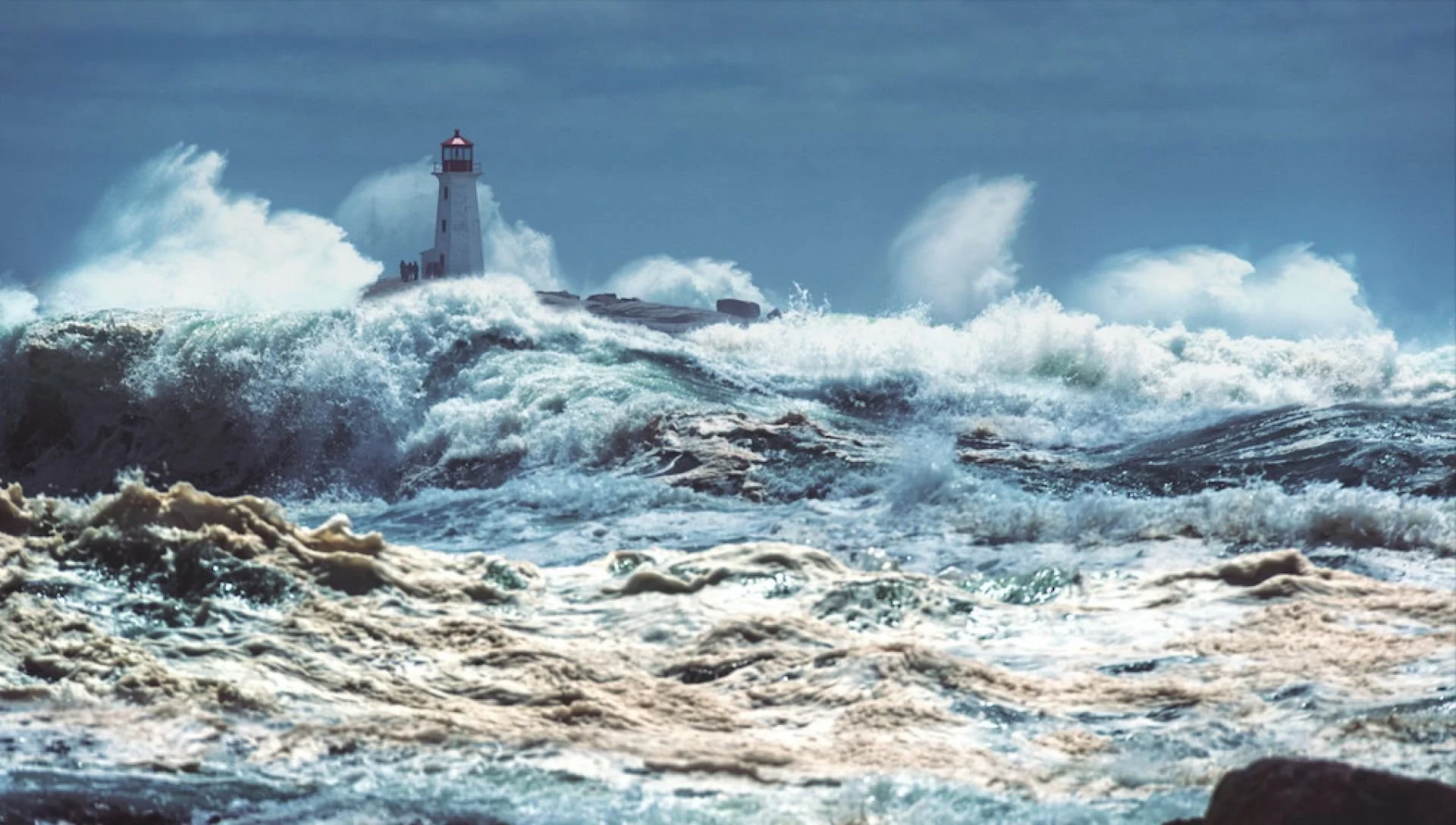
When rough seas overwhelmed me, one breath became my lighthouse.
Ten years ago, I signed on to help crew a 57-foot wooden sailboat from the Bahamas to Tortola. Before we even left port, the newly refitted engine failed. The six-member crew spent four days delayed, waiting for parts and service in what I can only call Bahamian time. Then a hurricane appeared in the forecast.
We left after the worst of the storm had passed, but the seas were still high and ‘confused’. Within 30 minutes in the darkness, the boat was pitching in every direction. Standing at the stern, I got violently seasick and ‘tossed my cookies’ all over my partner. He was remarkably gracious. I was not at my best.
For the next five days, I was mostly flattened in my berth below deck. I crawled to the head when necessary, which was often. I could barely lift my limbs. I couldn’t talk, or track much beyond the swirling misery of the moment.
Eventually, a tool came that I had learned during childbirth:
Inhale. Thank you for this breath. Exhale.
That became my entire world. Literally. I had no concern about
the destination,
the weather,
or how long the feeling would last.
All that mattered was the next breath.
A sense of deep gratitude followed each breath.
After three days, a friend offered me a bouillon cube in warm water and a saltine. He said it had helped him once. I nibbled a little. I sipped a little. By the end of that day, I could sit up. Later, I went up on deck. Eventually, I could get around without feeling like I would keel over.
The ocean had become absolutely docile. A hurricane absorbs all the moisture in the atmosphere and takes it along its path, leaving the water flat like a mirror and calm. Windless.
A positive sign: I had a thought other than Breathe:
I was contributing nothing to the work on the boat, and I wasn’t learning anything.
Looking back, I see what I missed then.
When one member of a team is down, it can be easy to assume that progress has stopped. From the outside, that person may appear absent, ineffective, or disconnected from the real action. Yet sometimes the most important work is happening at that very moment. The captain was teaching the crew how to manage when a person is hurt or out of commission.
And sometimes the work is internal - for me that was staying present when you cannot change the conditions.
In organizations, teams face their own rough water all the time: delayed decisions, leadership transitions, strained partnerships, funding pressure, competing agendas, and the human turbulence that comes when smart people are tired, uncertain, or overwhelmed.
In those moments, the instinct is often to push harder. Solve faster. Judge what looks like lost time.
But disruption presents another possibility.
The delay may be opening a new lens..
The setback may be teaching patience.
The discomfort may be building resilience.
I think about athletes during a weather delay. Play may be paused, but the time still matters. There is work to do: consider a new angle, refocus, reset. Presence through the interruption helps determine what happens when the game resumes.
The same is true at work.
When the waves get big, we don’t always need people to pretend they’re unaffected. Sometimes what’s needed most is the ability to stay with the reality of the moment and do the next thing that is possible. For me that was one breath. For a leader it might be one question. For a colleague maybe one act of trust.
That sailing trip was not one of my finer moments. But over time, I’ve come to respect that experience for what it taught me:
About presence.
And about the powerful work that can happen in an unplanned moment, even when it doesn’t look productive from the outside. And about how the person who seems most down may be learning something essential for themselves and, eventually, for the team around them.
When the waves get big, our work is not always to overpower them.
Sometimes the work is to meet them, breathe, and stay with the reality of the moment.
Sometimes the moment that looks least productive is doing the deepest work.
Enjoyed this article?
Join my newsletter and get new stories, practical resources, and insights delivered straight to your inbox.